Cytokines: basic structure, properties and nomenclature
Cytokine is a general name for any protein secreted by cells that affects the behaviour of nearby cells bearing appropriate receptors. Chemokines are secreted proteins that attract cells bearing chemokine receptors, such as neutrophils and monocytes, out of the blood and towards infected tissue.
CYTOKINES: proteins that act as mediators in the complex interactions between immunocompetent cells, inflammatory cells and haematopoietic cells. The functions of cytokines and their receptors are:
- To promote cell proliferation
- To promote cell activation and differentiation
- To regulate immune responses
A protein or glycoprotein secreted by immunocompetent cells, of low molecular weight (normally < 30 kDa), which regulates the development or function of other cells through its interaction with cell surface receptors.
•The term cytokine groups together the molecules secreted by lymphocytes (lymphokines) or by monocytes and macrophages (monokines).
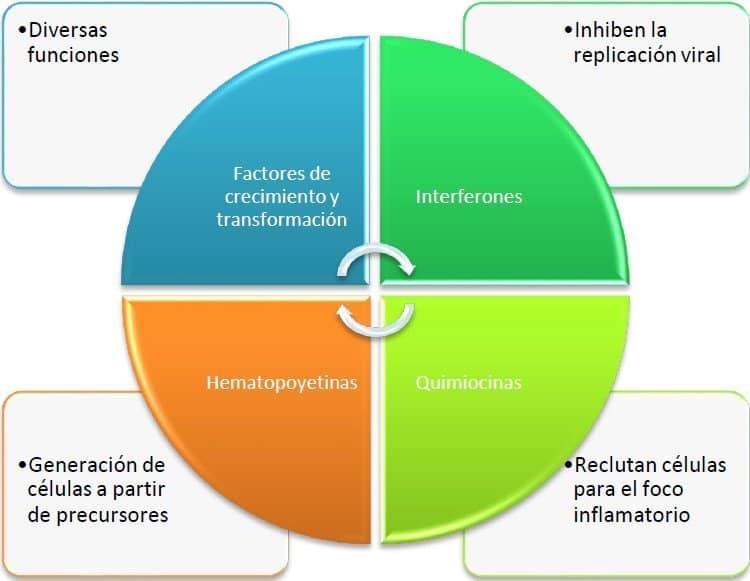
•Many are secreted by leucocytes and are called interleukins (IL), and they act on other leucocytes. IL-1 to IL-29 have been identified. •According to their function, there are interferons (which interfere with viral infections), haematopoietins (involved in haematopoiesis), chemokines or growth and transforming factors (chemotactic properties).
Properties of cytokines
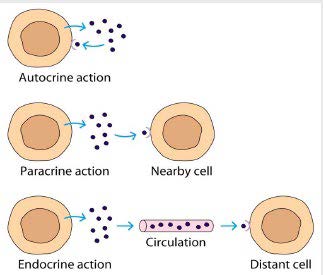
- Autocrine function: they act on the secreting cell itself (e.g. IL-2: some cells are activated and synthesise interleukin 2, which then has an effect on the very cell that synthesises it)
- Paracrine function: the most common; the target cell is close to the secreting cell.
- Endocrine action: they act on distant cells. (E.g. induction of fever by cytokines)
- The membrane receptor determines the specificity of the cytokine's function. Only those cells with a receptor for that cytokine will be able to respond to it.
- Interaction with target cells through specific membrane receptors starts signal transduction cascades inside the cells that induce changes in cellular gene expression, thereby determining the synthesis of specific proteins.
- Cytokines and their receptors have high affinity, similar to Ag-Ab binding (dissociation constants between 10-10 and 10-12 M), and can mediate their biological effect at picomolar concentrations. This means that when there are several cells around, the one with a higher-affinity receptor will be the one that responds most decisively.