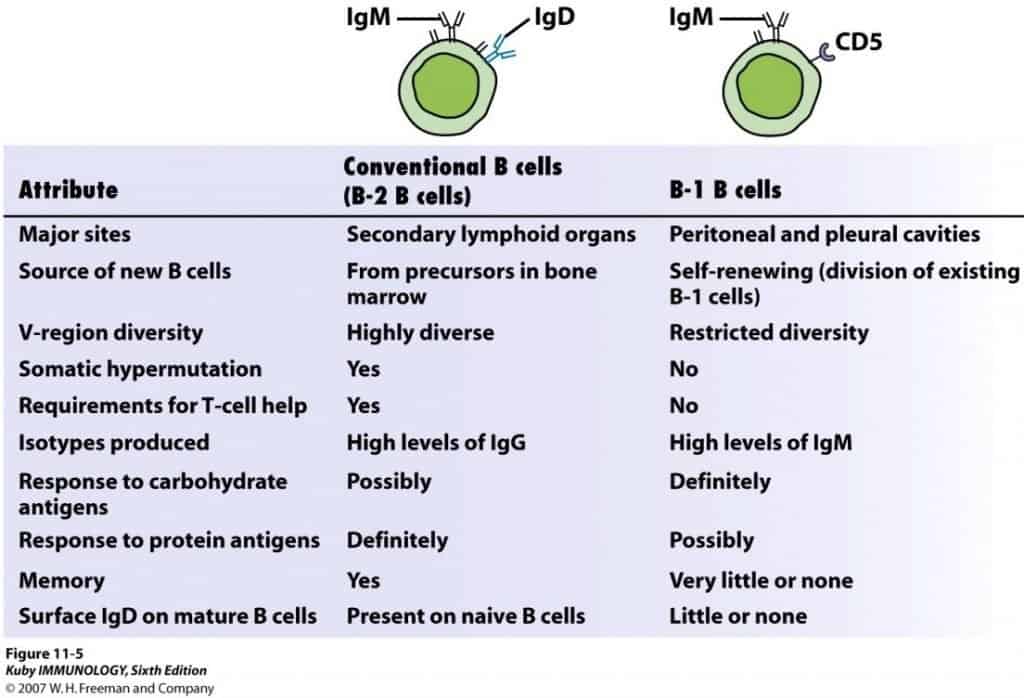
B-2 cells undergo all these processes in the secondary lymphoid organs. They are the most common cells. They need the help of T cells (T-dependent), produce mainly IgG and respond to protein-type antigens and some carbohydrates. They express two receptors, or immunoglobulins, on their membrane: IgM and IgD. They do not express CD5.
From a phylogenetic point of view, B-1 cells came before B-2 cells. They express CD5. They do not express IgD, or do so in very small amounts.
- They are found in the peritoneum and the pleural cavities, areas that should be sterile.
- They are cells capable of self-replication, and do not need T-cell help (they are outside the control of the immune system).
- They can respond to proteins but do so mainly against carbohydrates.
Remember that this lesson is part of the free courses from Paradigmia. Access the rest of the free courses here 👉FREE COURSES👈